
The Barakah Effect by Mohammed Faris: A Review of More With Less
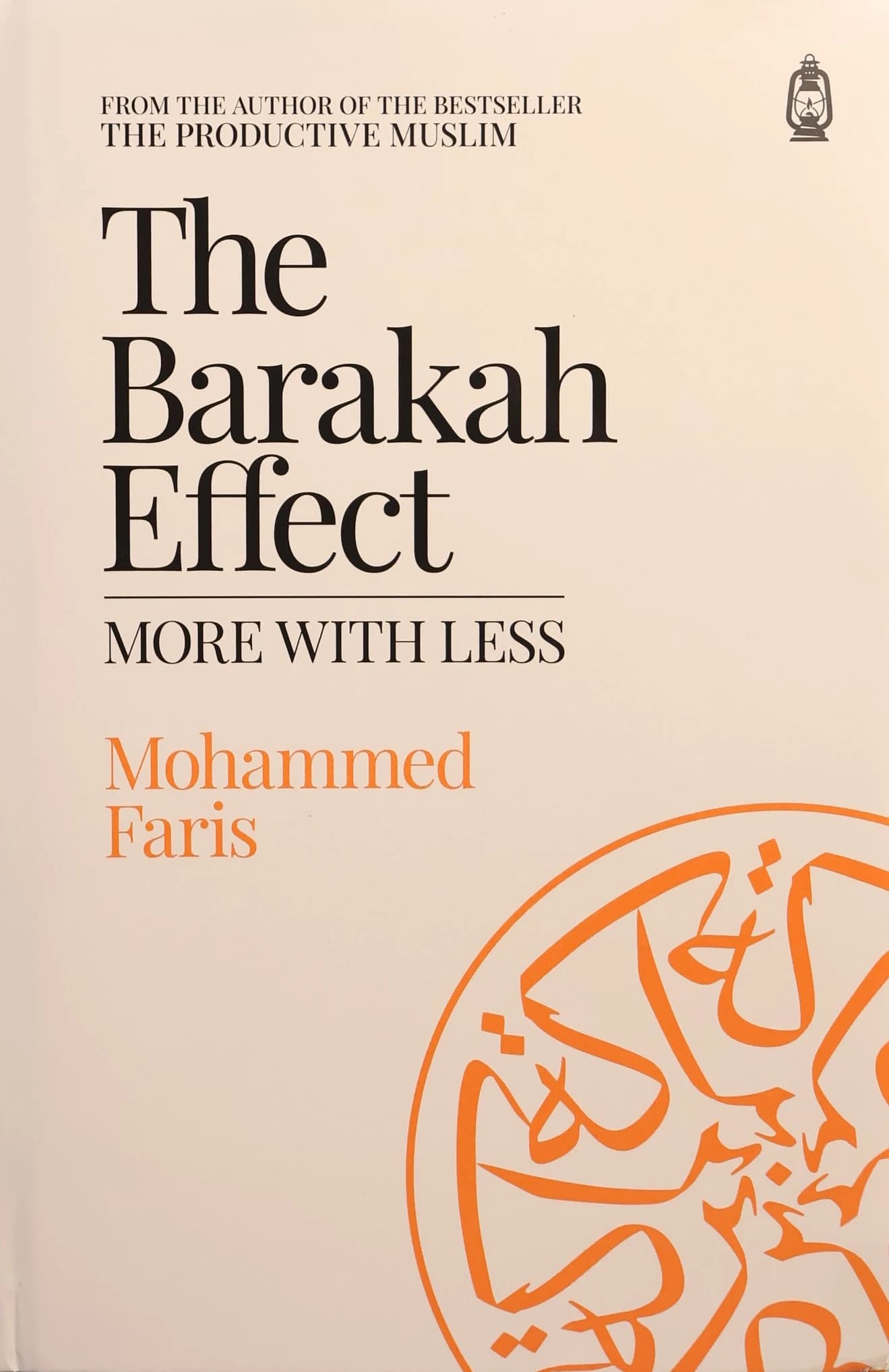
The Barakah Effect: More With Less is the newer book by Mohammed Faris, founder of The Productive Muslim. Where his first book focused on getting more done as a Muslim, this one asks a different question: what if the goal is not more output, but more barakah?
Barakah is usually translated as blessing, but Faris uses it to describe something specific: lasting spiritual and worldly good that comes from focused, sincere effort rather than from doing ever more.
1. Hustle Culture vs. the Barakah Paradigm
The book sets modern hustle culture, with its constant pressure to do more and its familiar end point of burnout, against what Faris calls the prophetic paradigm of barakah. The argument is that a Muslim can measure a good life differently: by the blessing in what is done, not by the volume of it.
2. Twenty-One Sources of Barakah
The practical core of the book is a set of twenty-one daily sources of barakah drawn from the Qur'an and Sunnah. They are built around inner qualities such as sincere intention, gratitude and patience, and are written as practices a reader can take into an ordinary working day.
3. Classical Scholarship Meets Contemporary Research
Faris draws on classical Islamic scholarship alongside contemporary research, so the book reads as a bridge between traditional teaching on barakah and the modern self-development and productivity writing many readers already know.
4. Who Should Read It
The Barakah Effect suits readers who feel stretched thin by work and study, readers of The Productive Muslim who want the next step, and anyone looking for an Islamic framework for purposeful living rather than another productivity system. It is written in English.