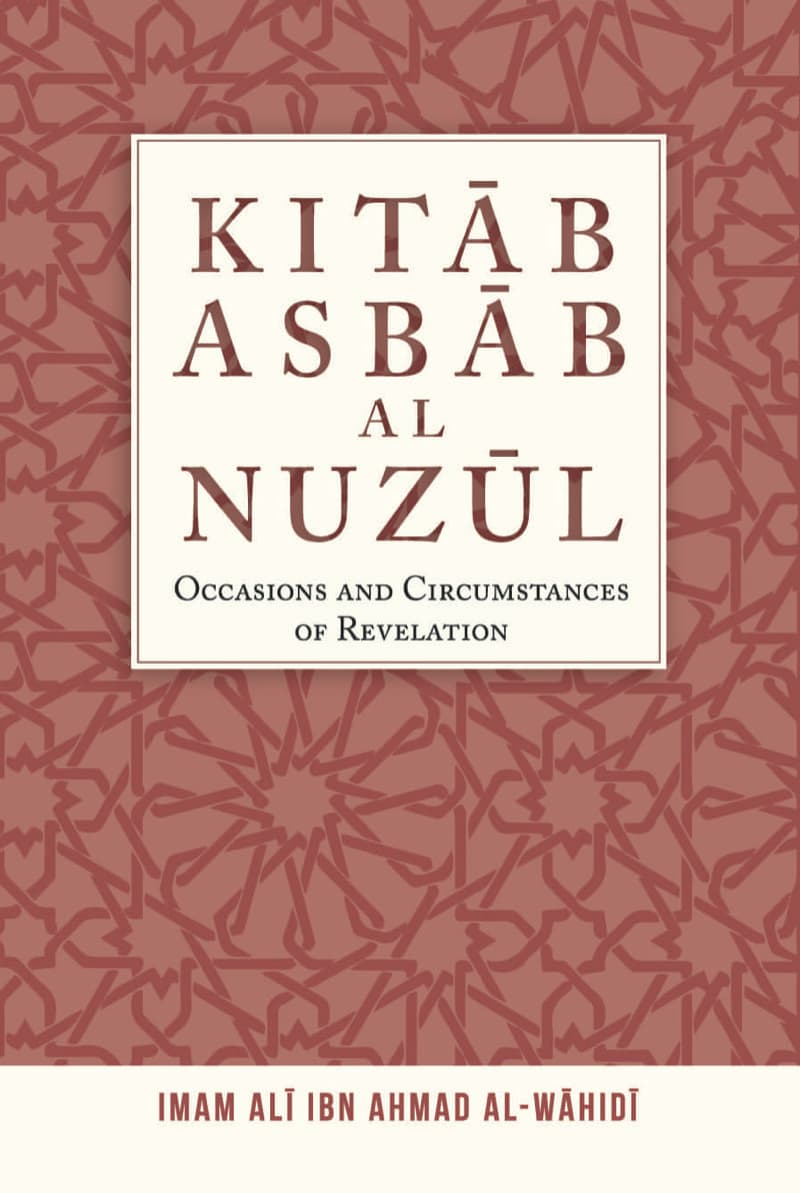
Unlocking Context in Revelation: The Role of Asbāb al-Nuzūl in Qur’anic Exegesis

Understanding the historical background behind Quranic verses is a fundamental pillar of traditional Islamic exegesis (tafsīr).
Kitāb Asbāb al-Nuzūl (Occasions and Circumstances of Revelation) by Imām Alī ibn Aḥmad al-Wāḥidī (d. 468/1075) stands as the foundational, classic work in this field. This English edition provides accessible entry into how historical events, queries, and specific circumstances shaped the revelation of various passages during the time of the Prophet Muhammad ﷺ.
1. Theoretical Framework & Methodology
Explores the definition, purpose, and types of asbāb al-nuzūl.
It addresses how revelations responded to specific events, direct questions, or general circumstances, while offering guidelines on determining whether rulings are specific to an event or general in application.
2. Literary & Scholarly History
Details the evolution of asbāb literature, etymology, and the narratological and legal functions of historical context in deriving sound Islamic jurisprudence.
3. Surah-by-Surah Analysis
Works sequentially through the Qur'an—covering major Surahs such as Al-Fātiḥah, Al-Baqarah, Āl ‘Imrān, and Al-Nisā’ through to the shorter chapters of Juz’ ‘Amma—highlighting approximately 570 specific instances of revelation alongside authentic chains of narration (isnād).
4. Final Verdict
Imām al-Wāḥidī’s Kitāb Asbāb al-Nuzūl remains an essential text for students, researchers, and general readers seeking to safeguard against misinterpretation. By grounding Quranic passages in their original historical and linguistic settings, this work illuminates the intent, wisdom, and practical application of divine guidance.