
The gold dinar debate: an introduction to Islamic economics reading
Ask ten Malaysian Muslims about the gold dinar and you will get at least three positions: it is the money Islam requires and its return is overdue; it is a noble idea that cannot work in a modern economy; and — the most common answer — what exactly is the debate about? This primer is for the third group, though we suspect the first two will find books here they have not read.
We are a bookshop, not a school of thought. Our Banking, Finance & Economics shelf carries the dinar's most passionate advocates and the builders of the Islamic banking system they criticise, side by side. What follows is a plain-language map of the argument and an honest reading list through it — no jargon, no fatwas from us, and nothing here is financial advice.
What the debate is actually about
Strip away the technicalities and the gold dinar debate is a disagreement about what money is. In the Prophet's ﷺ time, Muslims transacted in the gold dinar and silver dirham — money whose value lay in the metal itself. Modern money is different in kind: paper and digital balances whose value rests on state decree and public confidence, expandable by policy. Everyone in this debate agrees on those facts. The dispute is over what follows from them.
One camp argues that the shift to fiat money is not merely a technical change but a moral one — that money which can be created at will quietly transfers wealth from savers to issuers, functions as a hidden form of riba, and that Muslims should therefore work toward restoring gold and silver as money. The opposing camp — which includes most of the scholars who built modern Islamic finance — holds that money is a convention ('urf), that the Shariah regulates how we transact rather than which token we use, and that the real task is purging riba, gharar and injustice from the system we actually live in.
Malaysia is an apt place to read this argument. It is a global centre of institutional Islamic finance, and it has also seen recurring public interest in the dinar idea over the years. Both sides of this shelf were written, so to speak, for readers like you.
Start where everyone agrees: riba
Before the two camps part ways, they share a foundation: the Qur'an's categorical prohibition of riba. Whatever position you end up taking on gold, you cannot follow the argument without understanding what riba is and why Islam treats it with such severity. Start here.
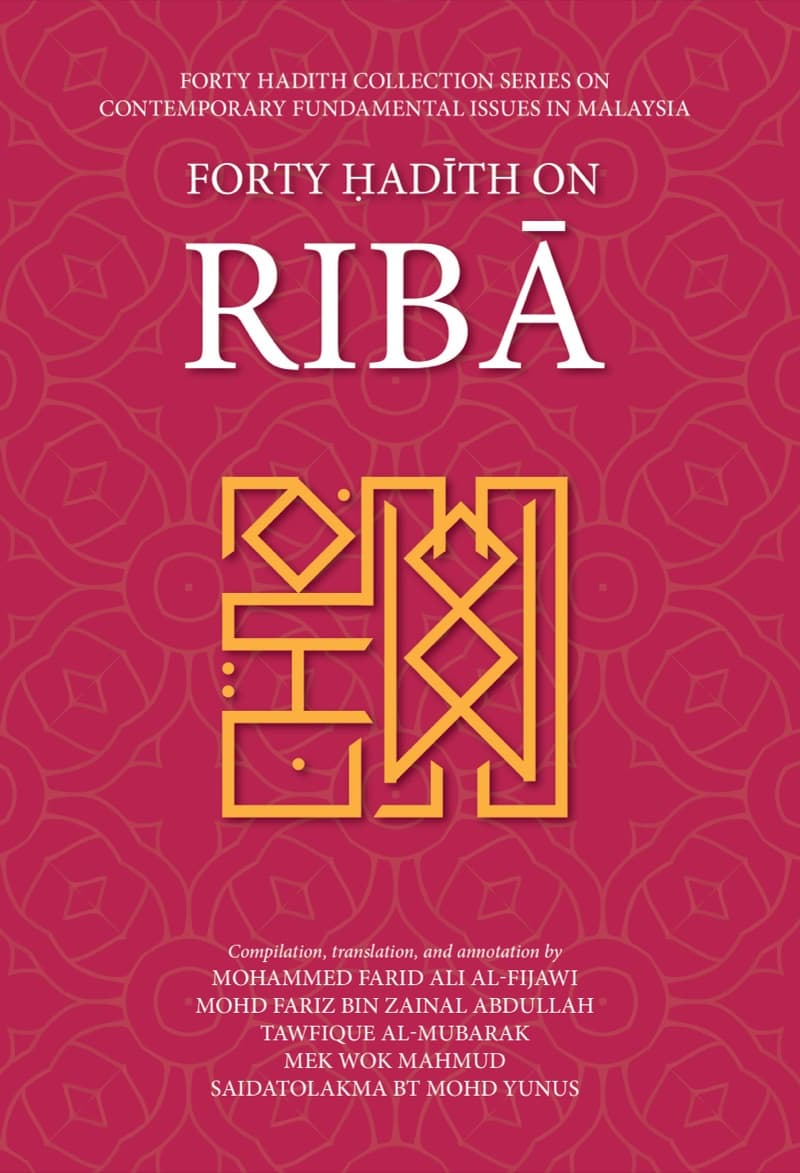
Forty Hadith on Riba — compiled, translated and annotated by Mohammed Farid Ali and published under our own imprint — puts the primary texts in your hands: forty narrations on riba with scholarly annotation, short enough to read in a weekend and dense enough to return to for years. It is the book we suggest first because it lets the sources speak before any modern author interprets them for you.
Follow it with The Importance of the Prohibition of Riba in Islam by Imran N. Hosein — a compact statement of why the prohibition matters economically and not only ritually — and, for the shortest possible orientation, the slim pamphlet Usury, 'Interest' or Riba, which walks through the terminology dispute in a single sitting. Malay readers can take the same first step with Larangan Riba di dalam al-Quran dan Sunnah, a translated treatment of the prohibition from the Qur'an and Sunnah.
The case for the dinar
The advocate's shelf begins with Imran N. Hosein's The Gold Dinar and Silver Dirham: Islam and the Future of Money — the most-requested dinar title in our store. It is short, direct and unapologetic: an argument that fiat money is implicated in the very injustice the riba prohibition targets, and that the restoration of gold and silver money is a religious concern rather than a monetary hobby. Readers coming from our Imran Hosein reading order will recognise the method; readers new to him get its most accessible application here. The same work is available in Malay as Dinar Emas dan Dirham Perak.
The scholarly heavyweight of this camp on our shelf is The Return of the Islamic Gold Dinar, in its new edition — a study of money in Islamic law and of what the book's subtitle calls the architecture of the gold economy. Where Hosein argues from prophecy and moral urgency, this volume works through jurisprudence and institutional design: what the fiqh actually says about money, and what a functioning gold-based economy would require. Read the two together and you have the dinar case at both registers — the sermon and the statute.
Read this camp with the same critical courtesy you would give the other: note where the argument rests on texts, where on economic reasoning, and where on prediction. Those are three different kinds of claim, and the strength of the case varies across them.
The other camp: Islamic banking as it exists
The institutional answer to the dinar advocates is not a single book but a working system — and its literature is well represented on our shelf. Islamic Banking & Finance: Shariah Guidance on Principles and Practices does what its title promises: a systematic treatment of the contracts and rules that govern Islamic banking as actually practised — murabahah, mudarabah, ijarah and their kin — written from inside the tradition that built the industry.
Because the industry's laboratory is here, the Malaysian titles matter. Islamic Banking under the Malaysia Law, by Aishath Muneeza, Rusni Hassan and Ismail Wisham, examines how Shariah contracts sit within Malaysia's actual legal framework, and Legislative Conflicts Facing Islamic Banking in Malaysia takes an unflinching look at where that fit is uncomfortable. The BBA Conundrum belongs beside them: a short, pointed study of bai' bithaman ajil — the deferred-payment sale that powered Malaysian Islamic home financing for decades and drew persistent criticism for resembling the interest-bearing loans it replaced.
Notice what this camp's honest books concede: that parts of the industry track conventional finance closely, and that legal engineering sometimes substitutes for economic substance. The dinar advocates did not invent those criticisms; the industry's own scholars wrote them down. That overlap — each side conceding part of the other's case — is where the debate gets genuinely interesting.
The reform middle: fixing banking without gold
Between restoration and defence of the status quo sits a quieter literature that asks: could banking be rebuilt on genuinely interest-free lines without re-monetising gold at all? Its most persistent voice on our shelf is A.L.M. Abdul Gafoor, whose Interest-Free Commercial Banking (in its revised edition) sets out a model for removing interest from ordinary banking operations. His Commercial Banking in the Presence of Inflation extends the analysis to the fiat-money problem the dinar camp cares most about — how to bank justly when the unit of account itself is losing value — and Islamic Banking & Finance: Another Approach, a slim companion that the author describes as complementing his other three books, distils the proposal.
For the widest-angle view, Economic Justice in Islam: Monetary Justice and the Way Out of Interest (Riba) treats the whole question as what it ultimately is — a justice problem, of which money and banking are instruments rather than ends. If the dinar books argue about the token and the banking books argue about the contract, this strand argues about the outcome: whether the system, whatever its instruments, deals fairly with the weak.
A reading plan, and how to keep your balance
If you want a concrete path through all of the above, here is the one we suggest to customers who ask. It alternates camps deliberately — the fastest way to a lazy opinion is to read one side twice before the other once.
- First: Forty Hadith on Riba — the shared foundation, from the sources.
- Second: The Gold Dinar and Silver Dirham — the advocate's case in miniature.
- Third: Islamic Banking & Finance: Shariah Guidance — the system as it exists.
- Fourth: The BBA Conundrum — the industry's hardest self-criticism, in one short book.
- Fifth: The Return of the Islamic Gold Dinar — the restoration case at full scholarly depth.
- Sixth: Interest-Free Commercial Banking — the reform path between the camps.
A closing note of bookseller's honesty
Thirty years of selling these books has taught us two things. The first is that this debate is not going away: interest in the riba and dinar titles rises with every episode of currency anxiety, and the Islamic banking titles sell steadily to the students and practitioners building the industry regardless. The second is that the readers who benefit most are the ones who refuse the shortcut of choosing a side before reading the other one.
So take the list above as it is offered: a map of a live argument, drawn by people whose job is to keep both shelves stocked. The economics is contested, the fiqh has more than one respected voice, and your conclusions — on what money should be, and on what to do about it in your own financial life — deserve better inputs than a headline and a lecture clip. That is what the books are for. And on the practical questions, speak to qualified scholars and licensed advisers; our part ends at the bookshelf.